Showing posts with label Global Ministries. Show all posts

Wednesday, March 5, 2014

Brief Musings on Bread (and Fasting)

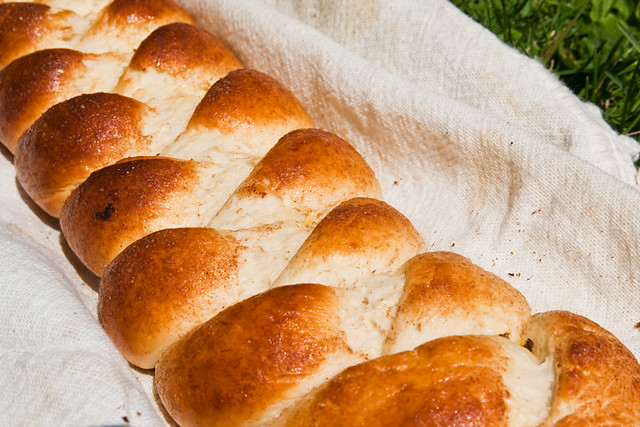
photo by Steven Depolo, Creative Commons Attribution license

Three sayings about bread wove themselves together in my mind recently, and they seem appropriate for a time when many are beginning a season of fasting.

I recently came across this quote for the first time by Nikolai Berdyaev, who was a Russian religious and political philosopher:

"Bread for myself is a material question.  Bread for my neighbor is a spiritual one."

As many people enter into Lenten fasts, I wonder about the connection between denying "bread" (or chocolate, or donuts, or...) to ourselves, and being mindful of our neighbors, near and far, who are without bread.  Is there a connection?  Should there be?  World Vision Youth is organizing a solidarity fast, and although the word "Lent" doesn't seem to appear anywhere, the timing is just right.

I don't remember when I first heard the most famous words of the Brazilian archbishop and liberation theologian Dom Helder Camara, but they have stayed with me:

"When I give food to the poor, they call me a saint. When I ask why the poor have no food, they call me a communist."

We might think that political and spiritual questions can (and should) be kept separate, but as simple a topic as food (and hunger) reveals that, if we believe that "bread for my neighbor" is a spiritual question, one that we are willing to seek answers to, any effort providing that bread soon leads us to more questions, which are often unpopular, even dangerous, politically.

The sung blessing for a meal that ties together these two quotes for me is one I learned here in Nicaragua, that has been shared through the Latin American Council of Churches' (CLAI) Liturgy Network:


Bendice Señor nuestro pan

y da pan a los que tienen hambre

y hambre de justicia

a los que tienen pan.

Bendice Señor nuestro pan.

English translation:
Lord, bless our bread.
and give bread to those who are hungry
and give hunger for justice
to those who have bread.
Lord, bless our bread.

May our bellies, whether filled, fasting, or hungry, hunger for justice.

Thursday, February 27, 2014

Day -33: The Full Circle of Partnership

The book of Ephesians 4:1-17 describes the church's call to unity this way:
"Speaking the truth in love, we must grow up in every way into him who is the head, into Christ, from whom the whole body, joined and knitted together by every ligament with which it is equipped, as each part is working properly, promotes the body’s growth in building itself up in love."
This passage was part of a bible study that we led recently with some of our colleagues here at the Inter-Church Center for Theological and Social Studies (CIEETS). The passage led us into a rich dialogue of reflection on what the "ligaments" are that join and knit together the various programs of CIEETS, and has led us to reflect on what those "ligaments" might be that bind U.S. churches to those here in Nicaragua.

Thanks to the work of CIEETS, dozens of rural Nicaragua's most impoverished communities now have access to clean water, improved sanitation, a more reliable food supply, better nutrition, and organic farming methods that help conserve the soil and protect the environment. Thanks to CIEETS, thousands of women and men are reading the Bible together, learning about the importance of social issues for the church, and awakening to the power of women doing theology (who have for so long had theology "done to" them). Thanks to CIEETS, many Nicaraguan Protestant churches have trained pastors and leaders committed to improving life for their communities and their country.

CIEETS organizes its work in two areas: the theological faculty (FEET) and the area for sustainable development and the environment (AMAD). At first glance, these might seem like wildly different areas of focus, but on closer inspection the overlap offers much fertile ground.  In last week's meeting, agronomists and theologians alike described their shared vision of and commitment to social justice that is integrated with Christian faith.

We were invited to facilitate this dialogue to help discover ways the two branches can work together to strengthen the entire institution.  We were asked to facilitate primarily because my work is in theological education and Tim's is in sustainable development and environmental education.  Last year we co-taught a class on Ecology and Theology (in the FEET), and in that course we took the undergraduate theology students to visit one of the AMAD projects, a concrete example of development projects that care for the environment and for people.

Before we closed, they had created a list of 8 concrete things they can do to help each other and learn from each other, starting next month and into the future.  This kind of work is more gritty than glamorous, but it is important for the optimal functioning of the whole.

The Ephesians passage, and the focus on organizational unity took me back to the first Bible study I was ever asked to lead in Nicaragua, in the fall of 2010, in El Sauce, in the Western region.  In preparation for the Christian Mission Church elections in March 2011, our friend Carlos was giving trainings in the rural regions to pastors and delegates on the church by-laws, focusing on the requirements laid out for elected leaders.  I prepared a brief reflection and questions for discussion on the same passage from Ephesians, focusing on the by-laws as the "ligaments" that hold the congregations and the national church together.

What I remember most about that visit was the feeling of fumbling.  I was still learning Spanish, and put hours into writing 4 or 5 questions that I hoped would be intelligible.  Speaking was hard, and trying to understand rural dialects for the first time even harder.  I fumbled as I took Quinn (age 3) to the latrine at night with a flashlight.  Neither the child nor the flashlight fell in, but it was not pretty. And Carlos laughed (not unkindly) as he read one of the questions I had written, which betrayed my total ignorance of a lively internal debate about the nature of spiritual gifts.

Despite that fumbling, we were welcomed with love from the beginning, and have learned so much from La Misión Cristiana and CIEETS.  As we come to the end of our time in Nicaragua, and prepare to travel to U.S. churches sharing stories of our time here, I realize that the work of Global Ministries is also a powerful "ligament" in the body of the global church. Our presence here is a powerful reminder to our Nicaraguan partners that the UCC and Disciples value and support their work. Our presence in North American congregations will share the good news of what other parts of "the body" are doing in other parts of the world.  In my mind, it "completes the circle," of being in relationship across borders.

PS - Over a decade ago, a teaching pastor and mentor of mine gave me a volume of The Gospel in Solentiname, and those dialogues by campesinos on a remote archipelago about the gospel readings were my first introduction to Nicaragua. They were compiled by Ernesto Cardenal, a priest and leader in the liberation theology movement and the Nicaraguan revolution.  We made the pilgrimage to Solentiname last weekend, and it is lovely to see how it has been developed as a tourist destination enough to generate income for the community, while still preserving the lush natural environment.  Another circle completed!

Thursday, November 28, 2013

Happy Thanksgiving (Seasons)

     At times, Nicaragua seems even farther away than it is from the United States.  I think part of this has to do with the fact that even nature has different rhythms here.  Quinn, who just turned six, was anticipating with great delight that "Summer starts on my birthday!"  In this tropical climate, winter is the rainy season, which starts in mid-May and summer, the dry season, typically begins in mid-November.  (Of course it rained really hard yesterday, apparently winter is lingering this year.)  Also, being in the tropics, sunrise and sunset times don't vary much between solstice and equinox, so there's no need for Daylight Savings Time.  This means that our time zone relative to folks in most parts of the U.S. changes twice a year, making coordinating timing that little bit more complicated.

    I think I was subconsciously yearning for the rhythms we're accustomed on a recent trip to a store that has a lot of imported foods.  I chuckled to myself as I unpacked and realized I had come home with apples, pecans, cranberries, none of which grow here in the tropics, and all of which represent for me the flavors of fall (and indeed, of Thanksgiving!).

    We're looking forward in so many ways to our return to the States in the (U.S.) spring (the end of summer here).  I'm also aware that just as it is still strange at times to be out of step in small and large ways with our family and friends back home, it will be strange also to move from the rhythm of our life here back into: four seasons,  planning things further in advance and with less flexibility, firmer boundaries between "work time" and "family time"... and probably other rhythms of life that we don't anticipate.

     La Misión Cristiana, too, is in a time of transition and finding a new rhythm.  The sudden death of president Rolando Boniche in July meant that the new president, Rev. Enrique Rugama, had to move from his farm (270 km and a 10 hour journey by bus away) to Managua, and the national leadership has had to deal with their grief as well as the bureaucratic processes required to effect the transition... and in just 4 months, will hold elections at their annual General Assembly at the end of March.  Many churches will receive new pastors at this time, too.

     Although there is much to prepare for coming transitions in our lives and the life of the church, I am also trying to be present in this season, rather than spend all my time and energy thinking about what's ahead.

     In September, La Misión Cristiana received a new mission volunteer, sent by Global Ministries and the Pentecostal Church of Chile (IPC), Magyolene Rodriguez.  She is a lovely person, a trained agronomist, an advocate for creation care and has a heart for service and for children and youth.  She stayed with us for a few weeks when she first arrived, and quickly became one of our girls' very favorite people (and ours as well!).  I felt so strongly when we arrived here that God's Spirit was at work matching the needs of the church and our interests and gifts... and I have that same sense again, that Magyolene has arrived in just the right moment for the church, which has been working on agricultural projects, food security, and environmental protection and restoration, but will be able to do even more with a person who has time and professional training to dedicate to these areas.

     In October, Elena Huegel, the Global Ministries missionary currently serving in Chile with IPC, a good friend of Magyolene, came to visit Nicaragua and give a training on Conflict Transformation to pastors and leaders of La Misión Cristiana.  The training was greatly appreciated by the participants, and we enjoyed the chance to meet and get to know Elena (and she had lots of good advice for us as we approach our transition back to the U.S. -- not only as a missionary, but as a child of missionaries as well!).

      Overlapping one day with Elena's visit, UENIC-MLK (the Martin Luther King, Jr. Evangelical University of Nicaragua), the university where we teach in the theological faculty, hosted a regional encuentro (meeting) bringing together leaders from Central America who are working on theological education that is committed to improving the lives of people in their countries.  We got to connect with some Disciples "neighbors" from Costa Rica and, all the way from Indianapolis, Rev. Felix Ortiz (our boss) and Rev. Shernell Edney, the program associate for Advocacy and Education.

     In November, 91 students from 3 regions graduated from our two-year program of Ministerial Formation.  I'll write more about this soon, we had a beautiful celebration full of joy for seeing the fruits of so much hard work by so many people (in learning, teaching, organizing, administrating, marshaling financial support, and always, travel for both teachers and students to make classes happen).  This month, because the dry season has arrived in the hot Western region even though Managua is still getting rain, Tim and the team went back to work building another bio-digester last week.

   In December, we'll be helping with preparations for the Regional Assemblies in January and the General Assembly in March.  We'll also be working with colleagues to make plans for the future, both
the three months of 2014 that we'll be here, and what our projects (theological education (me) and sustainable development/ food security (Tim)) will look like after we return to the U.S.  And, we're very excited that (a good portion of) our family is coming down to spend Christmas with us!  We're looking forward to relaxing, enjoying their company, and showing them a bit of the many things we've come to love about Nicaragua.  We're hoping they'll enjoy the tropical break from a northern winter!


Tuesday, October 1, 2013

Welcome Mayito!

We are very excited to welcome Magyolene Rodriguez to Nicaragua, where she will be serving as a long-term volunteer with la Misión Cristiana. Mayito comes to us from the Pentecostal Church of Chile and her work here in Nicaragua marks the first time that church has entered into an international mission partnership. You can read about her sending off from her home church here on Elena Huegels' blog. Happily Mayito is also blogging about her experiences, which you can read about here (in Spanish): Mayim en Managua. That should help make up for our lack of posting recently!

Estamos muy contentos de dar la bienvenida a Magyolene Rodriguez a Nicaragua, donde ella va a servir como voluntaria de largo plazo con la Misión Cristiana. Mayito nos viene de la Iglesia Pentecostal de Chile y su trabajo aquí en Nicaragua marca la primera vez que esa iglesia ha entrado en una asociación internacional de misión. Se puede leer sobre la despedida en su iglesia aquí en el blog de Elena Huegels. Felizmente, Mayito también escribe un blog sobre sus experiencias, que se puede leer aquí (en español): Mayim en Managua. Este ayuda en compensar para nuestra falta de escribir recientemente!
Mayito has already jumped into the life of the church here, leading a series of workshops in preparation for a tree-planting trip planned for later this month. We can already see that her background in agronomy and environmental science, along with the experience working with youth, will be a wonderful fit with the environmental and food security projects that the church already has in progress. We have also loved having her stay with us and she has quickly become Quinn and Maya's new favorite person. We hope here time here in Nicaragua will be filled with many blessings, adventures, challenges and happiness, both for her and for la Misión Cristiana.

Mayito ya ha comenzado su trabajo con la iglesia, llevando a cabo una serie de talleres en preparación para un viaje de plantación de árboles prevista para finales de este mes. Ya podemos ver que su formación en agronomía y ciencias del medio ambiente, junto con la experiencia de trabajo con los jóvenes, será una bendición para los proyectos ambientales y de seguridad alimentaria que la iglesia ya tiene en marcha. También ha sido maravillosa tenerla con nosotros en la casa y se ha convertido rápidamente en la nueva persona favorita de Maya y Quinn. Esperamos que su estancia aquí en Nicaragua estará lleno de muchas bendiciones, aventuras, desafíos y felicidad, tanto para ella como para la Misión Cristiana.

Thursday, May 23, 2013

On Hosting Visiting Groups

Laura Jean and I wrote a short article for the Global Ministries website about the experience of hosting visiting groups from U.S. churches.
Receiving groups from Disciples and UCC churches is one of the most enjoyable aspects of our job as missionaries. For us personally, church visits give us an opportunity to share what we love best about Nicaragua, the friends we’ve made and our work here. Helping a new group navigate their way through new situations reminds us of the path we’ve traveled in the nearly three years since we first stepped out of the air-conditioned blast of the airport into the damp Managua night, fumbling over the most basic tasks and gawking at the newness and strangeness of this country we were about to call home.
You can check out the rest of it here.

Thursday, March 7, 2013

Mission Moment

The Global Ministries weekly prayer comes once again to visit Nicaragua. The link is here -- previous mission moments here and here.

Pray for Nicaragua on Sunday, March 10, 2013

Lectionary Selection: Luke 15:1-3, 11b-32
Prayers for Nicaragua:
Beloved Father, you give to us abundantly, when we manage your gifts responsibly, and when we spend them frivolously.  Profligate God, you bless us richly, when we fall at your feet in gratitude, and when we grumble and worry about receiving our fair share.  We thank you and praise you for who you are.  Give us hearts that are generous to our brothers and sisters, that we may rejoice whole-heartedly when the lost are found and the least are served.
We pray for Nicaragua:
  • for so many struggling to survive, whose struggle is made more difficult by global economic turmoil and rising prices for petroleum, for transport, rice and beans.
  • for children whose parents are too poor to send them to free public schools, because they can’t afford shoes or school supplies, or rely on them to work so the family can eat.
  • We pray for La Misión Cristiana (the Christian Mission Church of Nicaragua): as they work to help children get an education, to help families have enough to eat, to train pastors to care for and inspire their churches and communities, to build biogas stoves and plant trees, and to share a vision of a new Nicaragua.
  • for the church leadership, as they work to make these visions reality with very limited resources, that the leadership will be inspired by love of the work to which God has called them, and continue to move forward despite real challenges.
In the name of Jesus Christ we pray, Amen.

Mission Stewardship Moment from Nicaragua:
The village of San Pedro is found about an hour from the paved road in the driest, hottest part of Nicaragua. There is no electricity.  Any water for cooking and cleaning must be carried up from the spring in buckets, and to get cell signal you have to climb a mountain. Each day brings only a few vehicles trundling by on the road that passes in front of the church. San Pedro is off the grid. And it was here that several pastors and lay leaders of the Christian Mission Churches gathered last year to kick off a new project -- the building of biogas cooking stoves known as biodigesters.

Rural Nicaraguans typically cook their meals using firewood. This practice often leads to delicious arroz y frijoles or sopa de gallina, but can cause health problems for the women who are in charge of the kitchen. Cutting firewood also accelerates the severe deforestation in the region, which can cause soil erosion, flooding, changes in rainfall patterns and more. And as trees grow more and more scarce, the daily search for firewood can be expensive and time-consuming. For this reason, a good alternative to firewood was one of the primary needs of the community identified by the local pastors.

A biodigester is a technology that converts cow manure (an abundant resource in this cattle ranching area) into methane cooking gas. With the collaboration of several U.S. partner churches, the Christian Mission has now built 3 working biodigesters for families near San Pedro, with plans for 7 more this year. The family who received the first biodigester reports that it is working well and that one bucket of manure yields 3-4 hours of cooking gas a day. The pastors in the region are hopeful that the project can continue and expand to benefit more local families.

Wednesday, November 14, 2012

A Day in the Life (Exhibit A)

A lot of people ask us "so, what's a typical day like for you?"  Our first response is usually laughter, because it often feels to us like a typical day is something that doesn't really exist in our life here in Nicaragua.  But, I'll share with you what I anticipate for today (and be sure to update if things change, as they often do).  It's kind of a special day, because Tim is traveling, but it's also not totally atypical, because we do a fair amount of traveling to the many rural churches of La Misión Cristiana.

Tim's big trip today is to install the second biodigester, just a few kilometers from the site of the first one, in a small village called Tamarindo Malpaso, at the parsonage of the 20th Christian Mission Church.  This church is in the Western Region, where they are doing the biodigester pilot project.  We have visited the region many times, for intensive theology courses, Regional Assemblies, planning meetings and other trainings.  It's in the general direction of León, and of course you keep making turns onto smaller, rockier roads as you get there.  We're right at the end of the rainy season, so it's finally dry enough to do construction again.

To this end, Tim went by the central office of La Misión yesterday to pick up the pieces of zinc for the roof and a bag of cement.  At 5:30 this morning, he went to pick up the church president, the Reverend Rolando Boniche, and his assistant, Sonia Cabezas, at their houses before heading out of town (the drive usually takes 3 to 3.5 hours).  They will meet the engineer who helps with the construction on the way, and he has the rest of the materials.  They should arrive at the church in Malpaso by 9:30 am.  The  church there has already dug the pit in which the biodigester will sit, so the actual construction should only take a couple of hours.

Meanwhile, back here in Managua, the girls and I are without our car, so a few minutes after 6:30 I put Maya in the stroller and we walked Quinn to school.  Quinn very much saw it as an adventure (as did Maya),  and chatted excitedly the whole way.  We got to school a few minutes before 7 (when she is supposed to arrive).  Maya and I got back to the house at 7:20, and Maya had a little bit of second breakfast.

A bit before 8, Cristina, our housekeeper/ nanny, arrived, so now I get to close the door to our bedroom and get some work done at the desk.  I'll work from home today, probably grading (overdue!) papers for my Ministerial Formation students and generally trying to get things organized in anticipation of the end of the year.  I hope to also spend a couple of hours today working on writing curriculum for the Ministerial Formation project.  Of course, at 11:30 or so I'll go pick up Quinn from school and we'll all have lunch together before I go hide again get back to work.  I'll take another break mid-afternoon to help her with her homework (yes, homework!  in kindergarten... Nicaraguan schools are a little different than my impression of U.S. schools).

If all goes as expected with the biodigester installation, they will have it built before noon.  They'll probably eat lunch there (prepared by the church receiving the biodigester), and are hoping to have a meeting with the pastors of the region after lunch.  That should take an hour or so, if they leave by 2 pm they could even make it back to Managua before dark.  We'll be eagerly awaiting Tim's return!

Friday, June 29, 2012

Mission Moment

Nicaragua is up to bat again for Global Ministries' weekly prayer -- you can read it here or below.

June 22, 2012


Prayers for Nicaragua: Mark 5:21-43

Most Holy God, we thank you for your healing touch in so many lives, for those you raise up, and those who reach out to touch you.  There are so many in this world, both near and far, who need to be made whole.  There are places where it is hard to see life, people who have been suffering too long.  

Most Beloved God, we lift up to you the people of the Christian Mission Church of Nicaragua, we thank you for their faithful service to you, their work serving the least and reaching the lost.  We thank you for the ways that your liberating Spirit moves through them to empower so many to reach out for their healing, to rise up and live abundantly.

We pray for the church as they receive visiting Disciples and UCC groups this summer.  We ask the eyes and ears of delegations be opened, that they might learn and grow, and know the healing and empowering touch of your Spirit.  Help them, and us, to work to restore wholeness.  In Jesus’ name we pray.

Amen.  

Mission Stewardship Moment from Nicaragua:

This year La Misión Cristiana is blessed to host more than eight groups from Disciples and UCC churches. Building relationships with other churches has been a part of La Misión’s DNA since its founding and they are excited to show Nicaraguan hospitality to so many North American sisters and brothers this year. For us, some of the best moments of these visits come in the gaps between the events on the official schedule. Jokes, laughter, stories about family, questions about food or songs, the accumulation of small bits of shared time, over the course of a week sometimes grows into friendship.

Shared worship services are also powerful moments. In one worship service last year, a rousing praise song was given an unexpected jolt by the sudden disappearance of light and the electric sound system. (Power outages are not uncommon here.) But like an a capella closing to a rock song, the congregation didn’t miss a beat and kept singing in the dark amidst a forest of cell phones and quickly-lit candles.

More recently, the pastor of one of the visiting groups was asked to preach at a local church, with Laura Jean translating the sermon into Spanish. Now you might think that such a set-up is a recipe for miscommunication or puzzlement, but the sermon touched a universal nerve, preaching how God calls us to do the uncomfortable and the difficult even when we think we are not up to the task. God asks us to go out into the “deep water.” As it happened, the denominational president, Rolando Boniche, was in attendance for that service and he later told the group that the message of the sermon reached him just at the moment when he needed the uplift.

There are so many ways we might fail to connect with our fellow humans. Language barriers confound us, national borders separate us, and the hassles of everyday life distract us. Speaking as parents of small children, we know how easy it can be to not to look beyond the crisis of the moment. It is good to remember in the midst of all that, that connection is indeed possible and there are churches everywhere willing to head out into that deep water and find what God has in store for us there.

Friday, March 16, 2012

Reflecting on Kony 2012 (Laura Jean gets published!)

A few days ago, I said to Tim "so... have you been following this Kony thing?" He replied, "I've been trying to ignore it."

I found myself pulled into the internet discussions about it, because all of these themes are things that my work here in Nicaragua raises for me. I spend a lot of time thinking about: colonialism and its legacy, channeling goodwill into good action, raising awareness of needs that people have in far-away places, and having respect for the agency, resources, and creativity of people living in difficult situations.

These things become even more pressing, as does the question of how you tell stories, when we do the part of our work that is interpreting what's going on in Nicaragua to the churches back home. And a big part of that interpretation is looming large on our horizon, as we prepare to support La Misión Cristiana (The Christian Mission Church of Nicaragua) as they receive 8 U.S. church groups between May and August. I am very invested in those visits going well, blessing both the visitors and the visited.

So, with all these things whirling in my head, my friend Bromleigh encouraged me to write a blog post for the Christian Century about it. And I did. And they published it!

Here it is.

Friday, December 30, 2011

Texas delegation (July/August 2011)

When English speakers are learning Spanish, there are a lot of aspects of the language that can be confusing. One of these is the fact that Spanish uses two different words where English only uses "to know." We use the same word to say "I know how to do long division" or "I know that guy." Saber (know-how) refers more to knowledge of facts, whereas conocer has to do with familiarity.

We received a very special delegation at the end of July/ beginning of August. Of course, all the groups that visit are special to us, but we really enjoyed helping to host a group that was moving from *knowing about* (saber) La Misión Cristiana and our work with them to really *getting to know* first-hand (conocer) the reality of Nicaragua and the church itself.

University Christian Church in Fort Worth, TX began to learn about the work that Global Ministries supports in Nicaragua because they met us when we spent a weekend with them in May 2010 as part of our preparation for going overseas. When we applied to serve with Global Ministries, they were in the middle of an interesting and challenging process, where they wanted to send new missionaries but needed extra funds to be able to support them. So they were seeking candidates and funds at the same time for ten positions the board had identified as the top priorities around the world. We were the first applicants who found a good fit with one of these positions -- and UCC in Fort Worth was the first church that identified some income from their endowed funds that could support Global Ministries sending a missionary somewhere in the world.

So, shortly after UCC called Global Ministries to share that they were ready to give the funds, we got a call to come in for the interview. And not too long after that, La Misión got the call saying that, if they were willing, they would be receiving us as missionaries. La Misión voted to receive us at their annual General Assembly in March.

When we spent the training weekend in May with UCC, we found out about yet another connection. In 2006, a Disciples minister from Texas had visited Nicaragua, and seen the infamous dump, La Chureca, where families lived in the mounds of trash, eking an existence out of looking for food and things that could be sold. It was a dangerous, unsanitary place for kids and adults alike. She was really depressed about the situation. When she got back to the US, she found out about a project called "Out of the Dump/ Project Chacocente" that was helping move families to a place where they could start new lives, farming small plots of land and living in a community. The project has also opened a school and a lending library in that community, further enriching the lives of the community members.

Rev. Laurie told this story at a youth conference in Texas as an example of how God is working even in situations that seem hopeless. Katie, a young woman who is a member of UCC (and now a college student) was inspired to organize a trip to Nicaragua to work with Chacocente. So she, with the support of Cyndy Twedell (the pastor at UCC who works most with mission, and spent a lot of time with us during our visit there last year) and Pastor Laurie, planned a mission trip that took place just a a few weeks ago. They spent the first part of the week building a classroom at Project Chacocente. They wrapped up their time there by taking some of the families to the beach.

They spent about 3 days with us and La Misión, staying at Centro Emmanuel, the church's training/ hospitality/ conference center in Ticuantepe, a small town just south of Managua.
They met with Rev. Rolando Boniche, the president of the church, and learned from him about some of the history of the church and its current work.
They helped with building a new house for the caretaker at Centro Emmanuel, a somewhat overdue project. (The church administrator said it was only by the grace of God that the old house had stayed standing long enough to be torn down.)


The group also got to experience a bit of Nicaraguan countryside and culture, visiting the Volcan Masaya:

the Catarina mirador:

as well as the traditional craft market in Masaya.

The Sunday night of their visit, they worshipped at the First Christian Mission Church in the Acahualinca neighborhood (not far from La Chureca, one of the many poor neighborhoods in Managua where La Misión churches are found). That was a powerful experience of welcome and unity across cultures for both the congregation and the visiting group. The electricity went on and off throughout the service, but the energy stayed high throughout. (It was also my first time translating a sermon from Spanish into English!)

We enjoyed the opportunity to get to know some of the UCC congregation better -- they were a great group, very flexible, hard-working, and open to new experiences and perspectives -- and they had a lot of fun together. Most of all, it was exciting for us to facilitate their introduction to Nicaragua and La Misión Cristiana.

Quinn loved "our friends from Texas," probably helped by the fact that they brought her presents -- a sweet little stuffed horse and book about a cowgirl that became instant favorites, as well as lots of stickers. :)

It was nice for her to spend time with a large group of English speakers who were interested in talking to and playing with her.

Wednesday, August 17, 2011

El Salvador

Our friend Nick Green just finished his term as a Global Ministries missionary in El Salvador and is heading back to the States to start his studies at Christian Theological Seminary in Indianapolis. He wrote a lovely post about the "hermandad" that is developing between La Iglesia Misión Cristiana, the church we work with here in Nicaragua, and the Lutheran Church of El Salvador, the church he worked with there.

It was really fun for us to have a role in this developing relationship.  Last month, we went for a very quick visit -- driving to San Salvador on a Saturday, spending two full days getting to know some of the churches and their projects, as well as a bit of Salvadoran history, and then driving back to Managua on that Tuesday.

The highlights were:
Tim, Quinn, and I, along with Sonia and Claudina representing La Misión Cristiana, worshipped with the Ríos de Agua Viva (Rivers of Living Water) Lutheran Church in San Salvador. I was invited to preach (my second sermon in Spanish!)

...and Nick and I both assisted Pastor Vilma in communion.

The service was very different than La Misión worship services (no electric guitars) -- it had a liturgy that felt very similar to U.S. Lutheran churches I've been to. But the one thing that was just like many of the congregations here is that it was over half children and youth.

In the afternoon, we visited an agricultural project outside of the city.  The church and project there are both called Fe y Esperanza (Faith and Hope), and they're in the first year of a new initiative called La Mayordomía de la Creación (Stewardship of Creation).
A group of campesinos and church folks is working with an agronomist to learn techniques for growing food organically without chemicals.

We spent a lot of time learning about and looking at organic fertilizer,
which does involve a lot of cow poop!
They have some special mixtures for making organic fertilizer, and they sent us home with a couple bottles. I am very grateful the bottles did not open in the back of the car on the way home!!

It was exciting to see a motivated, informed group of people working together to educate themselves and grow lots of great food.

We were inspired for our own work with the Nicaraguan church's agricultural projects, and to give more thought to integrating our food security projects with the one Tim is developing on care for the environment.

We also visited the chapel where Oscar Romero was assassinated.

It was a powerful experience for me -- I have wanted to visit El Salvador ever since I took a class on liberation theology in college.

My professor had been a journalist in El Salvador during the civil war, and I found Oscar Romero and the liberation theology movement very inspiring.

The church also runs a house called Casa Esperanza, where they support people in a variety of ways. Every day, they provide lunch for people who live on the street -- a scene that was remarkably similar to soup kitchens and lunch programs we've visited or volunteered at in the States. We met the small group of single mothers who cook for the lunch program and are housed there. We visited the tiny medical clinic and very nice classrooms where they hold their after-school programs. Quinn and I really liked the wooden toys and the books in the room for the smallest kids. The church also trains young people in the traditional painting style and we got to see some Salvadoran artesania being made.

We, Global Ministries missionaries and representatives of La Misión, were received with warm hospitality by the Lutheran church.  We look forward to more opportunities for developing this friendship between two churches that have been long-standing Global Ministries partners meeting critical needs in their respective countries.

Quinn was a trooper on the loooong car ride.  She memorized two of her picture books on the way (after having them read to her what seemed like a dozen times). She also enjoyed our time in El Salvador, especially seeing her buddy Nick again, staying at the "hotel" (the Casa Concordia guesthouse) and making friends with Alma, who manages the guesthouse.

Monday, May 9, 2011

New Leadership for La Misión

During the last weekend in March, La Misión Cristiana had their annual General Assembly, the meeting where delegates from churches around the country gather to vote on the business of the church. Every three years (and this was one of those years), the church undergoes a lot of changes in leadership. They hold elections for the national board and leaders of each of the 5 regions, and many pastors are moved between churches within regions. (A pastor may serve a given congregation for 3 or 6 years (one or two terms), but has to move after that.) It's also a time for celebrations of the church -- they baptized a lot of people last year, but this year they held an ordination for a group of nine ministers. Ordination has a lot of requirements in this church, including 6 years pastoring *before* one is eligible, so it was a very special recognition of the dedication of these servants.

We were observers of the Assembly, and found it very interesting. I was invited to give a devotional each of the two mornings (Saturday and Sunday), on the Assembly's theme: "May we be stones of help in the altar of the Lord" (based in 1 Samuel 7:12). Tim provided technical assistance to me in my presentation, as well as to the national staff, helping them use Power Point and the projector to show pictures that brought the reports on the church's projects to life. For Quinn, the coolest thing was that a lot of the kids she has befriended in our travels around the country were together in one place. For several days afterward she kept asking "are we going back to the church to play with the kids?"

Based on our experience of the elections, the church seems to have a vigorous democracy. Although the majority of delegates did usually vote for the recommendations of the national board, there were a couple surprises, and some heated discussions (all of which seemed within the bounds of appropriate conduct).

The vote that was closest to unanimous was for the new president of the national board, the Reverend Rolando Boniche. This office, as you might imagine, carries a lot of responsibility and quite a bit of power. Rev. Boniche was the secretary of the national board for the last 3-year period, and the former president, Rev. Maria del Pilar Ramírez Obando (Doña Pilar), was elected to the post of advisor on the national board. So, there's quite a bit of continuity in the leadership, and these two individuals, both of whom have served the church faithfully for many years, share a vision of the identity of the church, its commitment to service and celebration of its Nicaraguan context.

The thing that affects our work most directly is that Rev. Boniche decided to keep the same staff in the national office (the president has the *right* to hire new people), which makes our work and our lives much easier. The official transition was a week and a half ago, April 26, a month after the Assembly. So far, it seems to be going smoothly. It was a real pleasure and privilege to be received as missionaries by Doña Pilar, who has a very warm and spirit-filled presence, but I have confidence that Rev. Boniche will also be a strong and significant leader for the church, and think we are going to enjoy and learn from working with him as well.

Monday, February 28, 2011

February Flies

I can't quite believe it's going to be March tomorrow. Probably the main reason for time flying is that I've gotten started on a few of my major responsibilities. The most time-consuming one right now is teaching New Testament 3 (the third in a 3-part survey) to undergraduate theology students.

No puedo creer que el marzo comenzará mañana. La razón mas fuerte que el tiempo parece tan corto es que he empezado unas de mi responsibilidades. La que toma el mas tiempo ahora es la clase del Estudio del Nuevo Testamento 3 (3 en una serie de 3) a estudiantes en una programa de licenciatura en teología.


I also preached my first sermon here, way back on the first Sunday of February. My manuscript is available here, for those of you who read Spanish. Preparation for both preaching and teaching take much longer in Spanish, but I'm very happy to be able to communicate, even in a basic manner. I thought it was a good exercise to have to preach in fairly basic language, and I was happy with how it went, especially for my first time. Even more than the language, the challenge that I felt most in preaching was not knowing the congregation as well as I usually do. I look forward to preaching again as I get to know people even better.

También, predique por primera vez, en el primer domingo de febrero. Mi sermón está disponible aquí. Preparar para predicar o enseñar en español toma mas tiempo, pero me alegro de poder communicar, aunque sea en una manera bien basica. Mas del idioma, el desafío en predicar fue que no conocía muy bien la congregación. Espero predicar otras veces, después de conocer mas a la gente.

Tuesday, December 14, 2010

Happy Advent to US!

Today brought two awesome packages in the mail: one was an "Advent Calendar" from our awesome friend Elise. It is in parentheses because in her family, an Advent Calendar is not some silly little thing with chocolate or ornaments behind tiny doors. No, it is a little wrapped present for each of the days from December 1 to December 24! SO fun. :) And our family is fortunate enough to be a recipient of her creativity and generosity. The wrapped presents, in my experience (seeing it at her house as kids, and having in for our house in the last couple years), always contain segments of a puzzle -- a contiguous section of the puzzle, but not the whole thing, would be the wrapped gift for many of the days.

Anyway, international shipping being what it is (and my brain being a little slow, also, and our lives being busy, also), even though we were sent this package before Thanksgiving, we got it on day 14 of Advent. Quinn is super excited about the Advent Presents, and so are we all. Amy and Tim vetoed my plan to open 14 of the presents, but we did open at least 5 this evening. Quinn had a knack for selecting the ones that were puzzle pieces, and Amy and I got so excited that we now have 4/5 of a beautiful penguin puzzle on our coffee table. Fitting, since Elise is currently on an Antarctica cruise, where she works as a scientist studying penguins.

The second package was a sweet box full of stars from University Christian Church in Fort Worth, TX -- a Disciples congregation that supports us in many ways. The worshipers at The Source, their Sunday evening (emergent, I think) service decorated/ created stars at a prayer station, and sent them to us as an expression of connection and encouragement. Great to feel the love from friends and church family.

All in all, a good day. Tune in tomorrow for photos from Quinn's first school performance. Is it Santa, Baby? No, it's Baby Santa!

Saturday, December 11, 2010

3:52 down, 11:08 to go

Well, here's a little bit of our allotted "15 minutes of fame." It's up on the Global Ministries website.

Laura Jean Torgerson and Timothy Donaghy - Nicaragua from United Church of Christ on Vimeo.


It's interesting to get this glimpse of ourselves from June, when we only knew Nicaragua and La Misión Cristiana second-hand. I don't really enjoy seeing myself on video, but I'm glad nothing we said or thought then has turned out to be blatantly untrue. I remain incredibly grateful for the gifts of the churches that are supporting our work here.

Wednesday, December 1, 2010

Of Partnerships and Previews

Over a year ago, when we were starting to think and pray about working for Global Ministries, I did some Internet Research (yes, this is a theme in my life ;) ) looking for La Misión Cristiana, hoping to find any information about who the people of this church were and what they were about. They do not, you might not be surprised to find, have much in the way of a web presence. But I did find this video on the website of the New York Conference of the United Church of Christ.


The video is from a trip some of the staff from the New York Conference made in August 2007 to visit La Misión Cristiana and re-affirm their partnership. I watched this video quite a few times in the months leading up to our arrival, as I wondered what our experience here would be like. As things turned out, we arrived almost exactly three years after the trip in this slide show. Now that we've been here a little over 3 months, watching the video again to write this blog post was almost funny, because we now know many of the faces and places featured.

So, for those of you who are wishing for a tangible glimpse of our life and work here, this is a pretty good introduction. We have been to almost all of the churches and projects in the video, and even the Masaya Volcano! :) Doña Pilar, who was featured in the 7th Church portion of the video, is the current national president and one of my favorite people ever. Tim will be doing some teaching at the school run by the 2nd church, and I have already participated in a training at the Emmanuel Center, and that will be the location for what I currently think of as my main project -- a comprehensive series of workshops to enhance theological education of pastors. And we just realized today that Ruth, the young woman who is the current secretary in the national office, is the daughter of Raul Davila Castro, who was the president when this presentation was made. We discovered this today when she gave us an invitation to her wedding (which will be in the 7th church!).

I intend to post a fuller report of our trip to visit the cattle farm in Waslala, but we were also chuckling in recognition of his description of the roads, and when we realized that we stayed at the same hotel in Waslala.

This partnership with the New York Conference, and the video produced as a result, was helpful to us as we prepared to come here to serve, and I hope it will also be helpful to you, whether it might be a "preview" for a visit (personal, mission trip, or people-to-people pilgrimage -- we like them all!) or simply a chance to connect with us and La Misión Cristiana virtually.