- Lately the big news story in Nicaragua has been the government's decision to approve a trans-oceanic canal to rival the Panama Canal. The proposed routes will make use of Lago Cocibolca (although not the Río San Juan). The announcement has sparked a lot of discussion both pro and con. In a long article in Envio, the head of Nicaragua's largest environmental group, el Centro Humboldt, argues that the canal will "irreversibly damage" the lake and its ecosystems.
- La Prensa published videos showing Managua in 1972, both before and after the earthquake that destroyed the city.
- In the town of Rancho Grande, the people have been organizing large protests against the Canadian mining company, B2Gold and their plans to open a large gold mine. Much of the unrest has been stirred by the local Catholic parish and some of the local protestant churches in protest of the likely environmental mess that will result. We were just driving in that area this week and we saw several signs strung across the road arguing both against and in favor of B2Gold. We also saw a couple of new community projects that were quite visibly sponsored by B2Gold, probably as a PR response to the protests.
- An article about a seed bank project run by our friends at CIEETS.
- A bunch of Nicaraguan high-school kids discovered, and will get to name, a new asteroid.
- This article in Global Voices highlights several video projects addressing the problem of child labor in Nicaragua. Some of the videos are written and performed by the children themselves, reflecting on their situations.
- One big recent topic of conversation in the gringo community was this NY Times article about NYC mayoral candidate Bill de Blasio's activism in solidarity with Nicaragua during the 1980s. It seemed to me both an interesting glimpse of the young activist, while at the same time, kind of a sleazy oppo research hit job.
Wednesday, October 2, 2013
Random Reading 3
Here's another collection of random interesting stories about Nicaragua:

Tuesday, October 1, 2013
Welcome Mayito!
We are very excited to welcome Magyolene Rodriguez to Nicaragua, where she will be serving as a long-term volunteer with la Misión Cristiana. Mayito comes to us from the Pentecostal Church of Chile and her work here in Nicaragua marks the first time that church has entered into an international mission partnership. You can read about her sending off from her home church here on Elena Huegels' blog. Happily Mayito is also blogging about her experiences, which you can read about here (in Spanish): Mayim en Managua. That should help make up for our lack of posting recently!
Estamos muy contentos de dar la bienvenida a Magyolene Rodriguez a Nicaragua, donde ella va a servir como voluntaria de largo plazo con la Misión Cristiana. Mayito nos viene de la Iglesia Pentecostal de Chile y su trabajo aquí en Nicaragua marca la primera vez que esa iglesia ha entrado en una asociación internacional de misión. Se puede leer sobre la despedida en su iglesia aquí en el blog de Elena Huegels. Felizmente, Mayito también escribe un blog sobre sus experiencias, que se puede leer aquí (en español): Mayim en Managua. Este ayuda en compensar para nuestra falta de escribir recientemente!
 Mayito has already jumped into the life of the church here, leading a series of workshops in preparation for a tree-planting trip planned for later this month. We can already see that her background in agronomy and environmental science, along with the experience working with youth, will be a wonderful fit with the environmental and food security projects that the church already has in progress. We have also loved having her stay with us and she has quickly become Quinn and Maya's new favorite person. We hope here time here in Nicaragua will be filled with many blessings, adventures, challenges and happiness, both for her and for la Misión Cristiana.
Mayito ya ha comenzado su trabajo con la iglesia, llevando a cabo una serie de talleres en preparación para un viaje de plantación de árboles prevista para finales de este mes. Ya podemos ver que su formación en agronomía y ciencias del medio ambiente, junto con la experiencia de trabajo con los jóvenes, será una bendición para los proyectos ambientales y de seguridad alimentaria que la iglesia ya tiene en marcha. También ha sido maravillosa tenerla con nosotros en la casa y se ha convertido rápidamente en la nueva persona favorita de Maya y Quinn. Esperamos que su estancia aquí en Nicaragua estará lleno de muchas bendiciones, aventuras, desafíos y felicidad, tanto para ella como para la Misión Cristiana.
Estamos muy contentos de dar la bienvenida a Magyolene Rodriguez a Nicaragua, donde ella va a servir como voluntaria de largo plazo con la Misión Cristiana. Mayito nos viene de la Iglesia Pentecostal de Chile y su trabajo aquí en Nicaragua marca la primera vez que esa iglesia ha entrado en una asociación internacional de misión. Se puede leer sobre la despedida en su iglesia aquí en el blog de Elena Huegels. Felizmente, Mayito también escribe un blog sobre sus experiencias, que se puede leer aquí (en español): Mayim en Managua. Este ayuda en compensar para nuestra falta de escribir recientemente!

Mayito ya ha comenzado su trabajo con la iglesia, llevando a cabo una serie de talleres en preparación para un viaje de plantación de árboles prevista para finales de este mes. Ya podemos ver que su formación en agronomía y ciencias del medio ambiente, junto con la experiencia de trabajo con los jóvenes, será una bendición para los proyectos ambientales y de seguridad alimentaria que la iglesia ya tiene en marcha. También ha sido maravillosa tenerla con nosotros en la casa y se ha convertido rápidamente en la nueva persona favorita de Maya y Quinn. Esperamos que su estancia aquí en Nicaragua estará lleno de muchas bendiciones, aventuras, desafíos y felicidad, tanto para ella como para la Misión Cristiana.
Friday, August 9, 2013
Cuidar la Creación
Laura Jean and I just finished co-teaching a class at the university called Cuidar la Creación: Medio Ambiente, Ética y Teología (Caring for the Creation: Environment, Ethics and Theology). It was a class that combined environmental science and theology -- I'll let you work out which of us taught which parts -- and it was totally a blast, a really fun and rewarding experience. Right now we're gearing up to teach it again starting in a few weeks.
On the science side I talked about how ecosystems work, the carbon cycle, the nitrogen cycle, photosynthesis, food webs, ecosystem services, climate change, deforestation, environmental health and more. Good nerdy stuff! We also touched on some ethical and policy issues such as the Tragedy of the Commons, Environmental Justice and the international climate negotiations. On the theology side, Laura Jean began in the beginning with the creation story and its call for humans to "till and keep" and be good stewards of the land. She also touched on the clear connection between the environment and the biblical call for justice, along with newer lines of thought such as ecofeminism.
The main goal of the course was to start from the students' experience of their own environment and then to apply what they learned about science and theology to their own communities and churches. The first homework assignment was an essay asking them to describe an environmental problem in their town or neighborhood, and to think about what the costs were to the community and whether or not anyone benefited from the situation. The results were a fascinating glimpse into the ground-level environmental problems in Nicaragua.
 In a large class of nearly 40 students, a mix of urban-dwellers and campesinos, the three biggest problems identified were the following: (1) trash disposal and open trash heaps, (2) contamination of rivers and lakes, and (3) problems connected to clear cutting and deforestation. Teaching is a wonderful thing because you can learn so much from your students. Here's what I learned.
Anyone who has visited Nicaragua will have noticed the trash problem. In Managua the streets and gutters and canals are clogged with trash. Trash cans and dumpsters are non-existent and a culture of littering is well-established. The government has been working at improving the trash pick-up system, but many neighborhoods still suffer from unofficial dumping spots. Until recently, Managua was home to Central America's largest open-air trash dump, La Chureca, where hundreds of families lived by picking through the trash. (La Chureca was recently sealed and converted to a modern trash treatment dump thanks to a large aid package from Spain, and the families living there were given the option of employment at the recycling and sorting center.)
 Among the students in the class, there was a pretty strong consensus that trash was Nicaragua's biggest pollution problem. Essay after essay recounted the same story told in a different barrio or pueblo: open-air dumping pits, children living nearby, no help from the government and a lack of concern by too many people. The trash is a clear public health threat, in addition to being generally unpleasant to live next to. People joke cynically that the Nicaraguan national flower is the plastic bag, which can be seen fluttering in the fields all around the country. The culture of littering goes hand in hand with a lack of infrastructure for dealing with the problem, and an explosion in the availability of disposable stuff -- all of which makes it a tough problem to solve. This year the government rolled out a big initiative called Vivir Bonito, Vivir Bien (Live Beautiful, Live Well), in hopes of making a dent in the problem.
Trash is also clearly connected to the second problem - the contamination of the lakes and rivers of Nicaragua. The country is home to two of the largest freshwater lakes in the Americas, Lago Xolotlán (Lake Managua) and Lago Cocibolca (Lake Nicaragua). Lake Managua is severely contaminated, thanks to many decades of industrial dumping by factories that no longer exist, but whose contamination lives on after them. The lake also receives runoff from the city of Managua, which went largely untreated until recently. Cocibolca has avoided most of the extreme contamination of its sister to the north, but is currently at the center of the debate about the proposed trans-oceanic canal through Nicaragua.
 In rural areas, overuse of pesticides are one of the major sources of water pollution. In Chichigalpa, one of the major sugar cane-producing regions, is currently experiencing an epidemic of chronic kidney disease. Hundreds of young, healthy men working the sugar cane plantations (owned by Nicaragua's wealthiest family, the Pellas) are dying from kidney failure. The disease is especially tragic since it strikes the young and advances rapidly with no cure. And while it has been difficult to pinpoint the cause of the epidemic, some combination of contaminated water and extreme dehydration seem to be the likely culprits. One group of students from that area of Nicaragua did interviews with community groups and workers as part of their final project for the course (more on which soon).
Since the end of the civil war, Nicaragua's agricultural frontier has pushed further into the eastern rainforest. The main culprit, and the eventual endpoint of the land, is cattle ranching -- profitable but destructive. In twenty years from 1990 (the end of the civil war) to 2010, Nicaragua's forested land shrunk from 37% to 25% of the country (FAO 2010). The maps shown here (Liscow 2012) show the tremendous deforestation in the center of the country, from 1983 to 2000.


This deforestation is something we have seen first hand on our trips to the campo, and it is one reason behind the church's biodigester project. We have heard time and again from small Nicaraguan farmers about the harm that comes from not conserving the forests -- lack of firewood, erosion, loss of springs and water sources, floods, loss of wildlife and big changes in rainfall patterns.
According to many of our students, the various churches of Nicaragua are asleep when it comes to environmental issues. Several students have told us that the churches are perhaps overly focused on the soul and the hereafter that they forget the body and the present world. But environmental problems continue to grow and occupy a larger space in the national conversation, it's not likely that the churches will remain quiescent for long, at least not if our students have anything to say about it.
On the science side I talked about how ecosystems work, the carbon cycle, the nitrogen cycle, photosynthesis, food webs, ecosystem services, climate change, deforestation, environmental health and more. Good nerdy stuff! We also touched on some ethical and policy issues such as the Tragedy of the Commons, Environmental Justice and the international climate negotiations. On the theology side, Laura Jean began in the beginning with the creation story and its call for humans to "till and keep" and be good stewards of the land. She also touched on the clear connection between the environment and the biblical call for justice, along with newer lines of thought such as ecofeminism.
The main goal of the course was to start from the students' experience of their own environment and then to apply what they learned about science and theology to their own communities and churches. The first homework assignment was an essay asking them to describe an environmental problem in their town or neighborhood, and to think about what the costs were to the community and whether or not anyone benefited from the situation. The results were a fascinating glimpse into the ground-level environmental problems in Nicaragua.

Anyone who has visited Nicaragua will have noticed the trash problem. In Managua the streets and gutters and canals are clogged with trash. Trash cans and dumpsters are non-existent and a culture of littering is well-established. The government has been working at improving the trash pick-up system, but many neighborhoods still suffer from unofficial dumping spots. Until recently, Managua was home to Central America's largest open-air trash dump, La Chureca, where hundreds of families lived by picking through the trash. (La Chureca was recently sealed and converted to a modern trash treatment dump thanks to a large aid package from Spain, and the families living there were given the option of employment at the recycling and sorting center.)
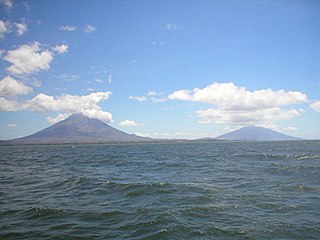
Trash is also clearly connected to the second problem - the contamination of the lakes and rivers of Nicaragua. The country is home to two of the largest freshwater lakes in the Americas, Lago Xolotlán (Lake Managua) and Lago Cocibolca (Lake Nicaragua). Lake Managua is severely contaminated, thanks to many decades of industrial dumping by factories that no longer exist, but whose contamination lives on after them. The lake also receives runoff from the city of Managua, which went largely untreated until recently. Cocibolca has avoided most of the extreme contamination of its sister to the north, but is currently at the center of the debate about the proposed trans-oceanic canal through Nicaragua.

Since the end of the civil war, Nicaragua's agricultural frontier has pushed further into the eastern rainforest. The main culprit, and the eventual endpoint of the land, is cattle ranching -- profitable but destructive. In twenty years from 1990 (the end of the civil war) to 2010, Nicaragua's forested land shrunk from 37% to 25% of the country (FAO 2010). The maps shown here (Liscow 2012) show the tremendous deforestation in the center of the country, from 1983 to 2000.


This deforestation is something we have seen first hand on our trips to the campo, and it is one reason behind the church's biodigester project. We have heard time and again from small Nicaraguan farmers about the harm that comes from not conserving the forests -- lack of firewood, erosion, loss of springs and water sources, floods, loss of wildlife and big changes in rainfall patterns.
According to many of our students, the various churches of Nicaragua are asleep when it comes to environmental issues. Several students have told us that the churches are perhaps overly focused on the soul and the hereafter that they forget the body and the present world. But environmental problems continue to grow and occupy a larger space in the national conversation, it's not likely that the churches will remain quiescent for long, at least not if our students have anything to say about it.
Friday, August 2, 2013
Mariposa de Alas Rotas
For a little bit of Friday night music, here is Nica singer-songwriter Katia Cardenal's "Mariposa de Alas Rotas" (Broken-Winged Butterfly). Today we sat in on a thesis defense given by a student for her Masters in Feminist Theology. It was a very powerful presentation about the sexual exploitation and trafficking of girls and young women in Nicaragua, and their perceptions and perspectives on God, and the church. It was a grim, enraging topic presented in a hopeful manner, touching on the concept of resiliency in the face of adversity. This song was the presentation's theme music, as Katia sings here ... a broken-winged butterfly, against the hurricane...
Thursday, June 27, 2013
Resilience and Change
The question came from a middle-aged woman in the audience. Like many Nicaraguan women of her generation she was slight of build, but strong of voice: "But what if your husband doesn't approve of your work outside the home?" The speaker's reply was a little bit shocking, but at the same time, it brought the house down with laughter.
"We'll he's dead now, so I am free. Thanks be to God."
 That morning we had gathered to hear from three women -- Aurora, Maria and Mayra -- who live and work in the area of Santo Tomas and Juigalpa, a rural part of Nicaragua known for its cattle ranching. All three are campesinas (rural women) and activists working to support and educate other women from their area -- especially small farmers, teaching agricultural techniques and organizing cooperatives. Their not inconsiderable task that morning was to explain to us how the world works, and we were lucky to be their students.
Every year CIEETS -- the theology education and sustainable development wing of the university where we teach -- organizes a cátedra (or conference) on women and gender issues in Nicaragua. This past December the focus was on the "Daily Life of Women and Adaptation to Climate Change" and we organized two days of talks and activities, one in Managua and the other in Juigalpa. I confess, I was worried the theme would be a hopeless jumble, but it worked beautifully. (I already blogged a few of the videos and songs from the conference here and here.)
 What the speakers showed was that we live in interesting times and that it is the women who must navigate the big changes that have come to rural Nicaragua, just as they have all around the world. A woman's husband may still harbor old patriarchal notions of how families should work, but at the same time the "old ways" are eroding under waves of economic, cultural and environmental change. And women -- who are on the front lines of putting food on the table and keeping the household together even if the men have to travel to find work -- are the ones confronting these changes and finding solutions.
Domestic violence was brought up a lot, and unfortunately, the problem of domestic violence is a critical one in Nicaragua today. It is often said that Nicaragua is the least violent country in Central America, a fact that obscures the violence that happens behind closed doors. Nica feminist groups have done a lot to raise the visibility of the issue with an effective series of ad campaigns, marches and legal advocacy. All three women immediately drew connections between domestic violence and education for women, the importance of building self-esteem among women, of building their economic independence, and of raising the next generation in a new paradigm.
 So what does this have to do with climate change, you might well ask. All three women echoed what we've heard from small farmers all around Nicaragua: the rains are different from in the past. They come at the wrong time, or not enough, or they come in one torrential downpour and then nothing, wrecking havoc with the planting and harvest schedule. This may be partially a result of global climate change, but a more immediate culprit is the tremendous local deforestation that Nicaragua has suffered in the past few decades. At any rate, there is a general sense among the farmers that making the land produce is harder now than in generations past. And as with other changes, this is something that affects women first and foremost.
The sprawling nature of the conversation is fairly typical of these events. Once you enter through one door (e.g. domestic violence), you find yourself talking about every possible related topic: education, unemployment, food prices, rainfall patterns, etc. etc. The spanish word that gets used a lot is el desarrollo integral, which means integrated or holistic development. It's the idea that we need to address multiple issues in parallel in order to make progress. It can be daunting or inspiring, depending on your mood.
 For my part, I gave a brief talk on the science of climate change, the basics of the greenhouse effect and what rising levels of carbon dioxide might have in store for us in the future. The focus of the talk was on adaptation. Even if the world manages to put in place a binding treaty to reduce global emissions of greenhouse gases in the next few years (a depressingly remote possibility at this point), we will still need to adapt to a wave of changes in the next several decades. This is because there is a certain amount of climate change already "baked into the cake" due to the permanence in the atmosphere of CO2 that has already been emitted.
We showed the following video (produced by the UN Environmental Program) about the importance of investing in climate change adaptation measures. Nicaragua has long experience with natural disasters and so the need for such adaptation and preparedness measures is an easy sell. What is harder is securing funding for what needs to be done, and getting reliable regional predictions of climate change impacts (a very hard scientific problem that is woefully underfunded).
"We'll he's dead now, so I am free. Thanks be to God."

Every year CIEETS -- the theology education and sustainable development wing of the university where we teach -- organizes a cátedra (or conference) on women and gender issues in Nicaragua. This past December the focus was on the "Daily Life of Women and Adaptation to Climate Change" and we organized two days of talks and activities, one in Managua and the other in Juigalpa. I confess, I was worried the theme would be a hopeless jumble, but it worked beautifully. (I already blogged a few of the videos and songs from the conference here and here.)

Domestic violence was brought up a lot, and unfortunately, the problem of domestic violence is a critical one in Nicaragua today. It is often said that Nicaragua is the least violent country in Central America, a fact that obscures the violence that happens behind closed doors. Nica feminist groups have done a lot to raise the visibility of the issue with an effective series of ad campaigns, marches and legal advocacy. All three women immediately drew connections between domestic violence and education for women, the importance of building self-esteem among women, of building their economic independence, and of raising the next generation in a new paradigm.

The sprawling nature of the conversation is fairly typical of these events. Once you enter through one door (e.g. domestic violence), you find yourself talking about every possible related topic: education, unemployment, food prices, rainfall patterns, etc. etc. The spanish word that gets used a lot is el desarrollo integral, which means integrated or holistic development. It's the idea that we need to address multiple issues in parallel in order to make progress. It can be daunting or inspiring, depending on your mood.

We showed the following video (produced by the UN Environmental Program) about the importance of investing in climate change adaptation measures. Nicaragua has long experience with natural disasters and so the need for such adaptation and preparedness measures is an easy sell. What is harder is securing funding for what needs to be done, and getting reliable regional predictions of climate change impacts (a very hard scientific problem that is woefully underfunded).
Thursday, May 23, 2013
On Hosting Visiting Groups
Laura Jean and I wrote a short article for the Global Ministries website about the experience of hosting visiting groups from U.S. churches.
Receiving groups from Disciples and UCC churches is one of the most enjoyable aspects of our job as missionaries. For us personally, church visits give us an opportunity to share what we love best about Nicaragua, the friends we’ve made and our work here. Helping a new group navigate their way through new situations reminds us of the path we’ve traveled in the nearly three years since we first stepped out of the air-conditioned blast of the airport into the damp Managua night, fumbling over the most basic tasks and gawking at the newness and strangeness of this country we were about to call home.You can check out the rest of it here.
Thursday, May 16, 2013
Midnight Journey to the Other Side (of Nicaragua)
Our bus left Managua at 4:30 in the afternoon, heading for the mining towns of Rosita and Bonanza on the Caribbean coast of Nicaragua. If all went well, we would be in Rosita a little after dawn the next morning. Thirteen bumpy hours, traveling dark roads through the heart of Nicaragua in a cramped, crowded, converted school-bus. We were traveling with our friend Sonia to the most remote cluster of churches of La Misión Cristiana to participate in the theological education classes in that region. Or rather, Laura Jean and Sonia were going to teach, I was going for fun. Our final destination was called, appropriately enough, El Retiro -- which means "The Retreat" in Spanish.
Our route took us through Boaco, then a late dinner in Muy Muy, although we decided not to eat or drink much, worrying about the rumored lack of bathroom breaks. As it turned out we did stop in Río Blanco and Siuna, and later along the road when the bus got a flat. Beyond Río Blanco the pavement gave out. Although every seat was full when we left Managua, amazingly, they kept adding more passengers as the night went on. The center aisle of the bus was filled with upturned buckets and plastic stools for the extra passengers to sit on, until every last possible space was filled.
There were chickens and puppies traveling with us, and giant sacks of beans. The bus stopped occasionally to deliver packages to random farmhouses along the route. We traveled the whole night blasting music from loudspeakers, perhaps to keep the driver awake as we barreled through the dark, feeling every single rut and pothole. Almost as loud was the wind from the open windows, which also brought the 2 a.m. cold and the smell of diesel exhaust. By morning I almost could taste it.
 It was, as you might imagine, a pretty uncomfortable night. The spacing of the seats was slightly less than the length of my thigh bone, meaning that I was unable to sit normally facing forward and spent the night twisting from one side to another, jamming my knees into cracks, trying to find a comfortable position. Laura Jean's seat was on top of the wheel well, making it even worse. Nothing we tried seemed to help for long. Allegedly I did drift off to sleep at some point because I awoke as the sun was peeking over the horizon, my eyes gunked over and woozy from the motion.
We rolled into Rosita at 5:30 a.m. Our instructions were to head directly to the bus terminal and grab the 6 a.m. bus to Kukalaya. The latrines were locked and nothing was open for breakfast, so we boarded the bus and kept moving forward.
 Unfortunately, that bus was stopped in the next town of Susun. It turns out that some local farmers were staging a huelga (a strike or protest). We got off the bus, a little confused, but someone told us that if we walked through the town we could catch another bus on the other side. Upon crossing a wooden bridge we saw a crowd of thirty or so men, armed with machetes and clubs. They had dragged branches and pieces of wood across the road and were stopping and turning around all vehicle traffic -- public buses and private pickup trucks alike. They didn't seem to have any problem with pedestrian traffic and we climbed over with no problems.
(We found out later what the dispute was about. The government has protected a large section of northern Nicaragua as the Bosawas Reserve. Large sections of the park are still pristine forest, home to indigenous groups such as the Mayagna. However, since the government has almost no ability to police the area, other poor landless farmers have squatted on Mayagna land, burning down the forest and planting crops. Tensions between the Mayagnas and the settlers have spiked in recent weeks, leading to the murder of one Mayagna leader and calls for government intervention. Apparently the people blocking the roads in Susun were the landless squatters hoping to force the government to recognize them. You can read a bit more about the conflict here and here.)
On the other side of the barricades we waited for a while at a pulperia with some other displaced travelers, waiting for the mythical bus and wondering what to do. The sun was getting hot, even thought it wasn't yet 8 in the morning. Once we saw that the protesters were setting up new barricades to trap vehicles coming from the other direction, Sonia said that we should set off walking. And so we bought some water and headed out, not entirely sure how far we had to go to reach our destination.
Our walking companions were a woman named Elizabet and her 3 kids, who looked like they ranged from age 6 to 10. They were heading in our direction and took turns carrying a heavy bag of red beans. They were extremely cheerful traveling companions, the kids were uncomplaining and told funny jokes about how we should just commandeer some bicycles to finish our trek. We knew that we were heading for a cluster of towns called California, El Black or Riscos de Oro, depending on who you talked to. Supposedly the presbitero for the northern region, José Adan, was going to meet us there and travel on farther with us.
We saw multiple buses heading in the opposite direction, but none ever returned to pick us up. We figured that the protesters had stopped them and even prevented them from turning around. So we kept walking. Sonia insisted that we had to keep moving ahead, and it was great advice, although at the time we wondered. We also noticed that this part of Nicaragua, more so than anywhere we have visited, was suffering from a terrible deforestation-- the jungle transformed by slash-and-burn agriculture into broad fields and cattle pasture. Specifically for us, this meant that there was hardly any shade and after an hour or two of walking we were hot, thirsty and sunburned.
Around 11 a.m. we arrived at a crossroads and found many people waiting for buses that weren't going to appear. There were a couple of pickup trucks around, but they were charging exorbitant rates, so we steeled ourselves to keep walking, even though the hottest part of the day was coming up. Someone told us that California was a 2-3 hour walk from where we were. Sonia rallied us and we pushed on ahead.
Very quickly our perseverance was rewarded. A pickup truck packed with people approached and in the passenger seat was José Adan. Hearing that we had been walking, he and the other hermanos from the church mobilized some transportation and came in search of us. We had never been so happy to see a friendly face. We piled in the truck and arrived in Riscos de Oro in no time. There we got to sit down and have some lunch with José Adan, meet his family and some of the other church members (who were themselves traveling back to El Retiro from an event at a different church).
After lunch, we piled once more into the pickup and made the hour-long trip to the Río Kukalaya. The pickup somehow managed to hold almost 20 people. It was a surprisingly fun trip, even given that I was exhausted and holding on for dear life. People laughed and told jokes, enjoying the wind and the carefree sense hanging off the back of a pickup. Everyone said that we were traveling norteño style. The landscape continued to show severe signs of slash-and-burn deforestation, and we even passed some fields that were still smoldering. However, one stretch of the road was seemingly untouched forest, and José Adan said that it was owned by a lumber company that was actively reforesting its lands and trying to manage the forest somewhat sustainably.
We arrived at the Río Kukalaya, which was at low ebb, and crossed it in a dugout canoe, pushed by a small boy. On the other side we mounted up on horses (a first for me!) and rode for about an hour to another river, crossed it and found ourself in El Retiro just as the late afternoon sun was bathing it in a golden glow. El Retiro is a beautiful green space, not heavily forested, with wooden houses raised up on stilts and spaced well apart from each other. After traveling through half-burned fields for hours, it seemed like a true refuge in comparison.
We stayed in the house of Pastor Secundino. After 24 hours of straight travel, and 48 hours of being awake, we went directly to the nearby river, called the Río Rarawas, to clean off the dust and the grime. The water was warm, but miraculously refreshing. After that we ate dinner, watched the fireflies come out and collapsed into bed.
 |
| Fast & Furious, our aptly named bus |
There were chickens and puppies traveling with us, and giant sacks of beans. The bus stopped occasionally to deliver packages to random farmhouses along the route. We traveled the whole night blasting music from loudspeakers, perhaps to keep the driver awake as we barreled through the dark, feeling every single rut and pothole. Almost as loud was the wind from the open windows, which also brought the 2 a.m. cold and the smell of diesel exhaust. By morning I almost could taste it.
 It was, as you might imagine, a pretty uncomfortable night. The spacing of the seats was slightly less than the length of my thigh bone, meaning that I was unable to sit normally facing forward and spent the night twisting from one side to another, jamming my knees into cracks, trying to find a comfortable position. Laura Jean's seat was on top of the wheel well, making it even worse. Nothing we tried seemed to help for long. Allegedly I did drift off to sleep at some point because I awoke as the sun was peeking over the horizon, my eyes gunked over and woozy from the motion.
We rolled into Rosita at 5:30 a.m. Our instructions were to head directly to the bus terminal and grab the 6 a.m. bus to Kukalaya. The latrines were locked and nothing was open for breakfast, so we boarded the bus and kept moving forward.
 Unfortunately, that bus was stopped in the next town of Susun. It turns out that some local farmers were staging a huelga (a strike or protest). We got off the bus, a little confused, but someone told us that if we walked through the town we could catch another bus on the other side. Upon crossing a wooden bridge we saw a crowd of thirty or so men, armed with machetes and clubs. They had dragged branches and pieces of wood across the road and were stopping and turning around all vehicle traffic -- public buses and private pickup trucks alike. They didn't seem to have any problem with pedestrian traffic and we climbed over with no problems.
 |
| Walking. |
On the other side of the barricades we waited for a while at a pulperia with some other displaced travelers, waiting for the mythical bus and wondering what to do. The sun was getting hot, even thought it wasn't yet 8 in the morning. Once we saw that the protesters were setting up new barricades to trap vehicles coming from the other direction, Sonia said that we should set off walking. And so we bought some water and headed out, not entirely sure how far we had to go to reach our destination.
 |
| Waiting for the bus. |
We saw multiple buses heading in the opposite direction, but none ever returned to pick us up. We figured that the protesters had stopped them and even prevented them from turning around. So we kept walking. Sonia insisted that we had to keep moving ahead, and it was great advice, although at the time we wondered. We also noticed that this part of Nicaragua, more so than anywhere we have visited, was suffering from a terrible deforestation-- the jungle transformed by slash-and-burn agriculture into broad fields and cattle pasture. Specifically for us, this meant that there was hardly any shade and after an hour or two of walking we were hot, thirsty and sunburned.
 |
| Evidence that I've been on a horse! |
Around 11 a.m. we arrived at a crossroads and found many people waiting for buses that weren't going to appear. There were a couple of pickup trucks around, but they were charging exorbitant rates, so we steeled ourselves to keep walking, even though the hottest part of the day was coming up. Someone told us that California was a 2-3 hour walk from where we were. Sonia rallied us and we pushed on ahead.
Very quickly our perseverance was rewarded. A pickup truck packed with people approached and in the passenger seat was José Adan. Hearing that we had been walking, he and the other hermanos from the church mobilized some transportation and came in search of us. We had never been so happy to see a friendly face. We piled in the truck and arrived in Riscos de Oro in no time. There we got to sit down and have some lunch with José Adan, meet his family and some of the other church members (who were themselves traveling back to El Retiro from an event at a different church).
 |
| Slash-and-burn. |
 |
| Arriving in El Retiro. |
 |
| The River. |
Subscribe to:
Posts (Atom)